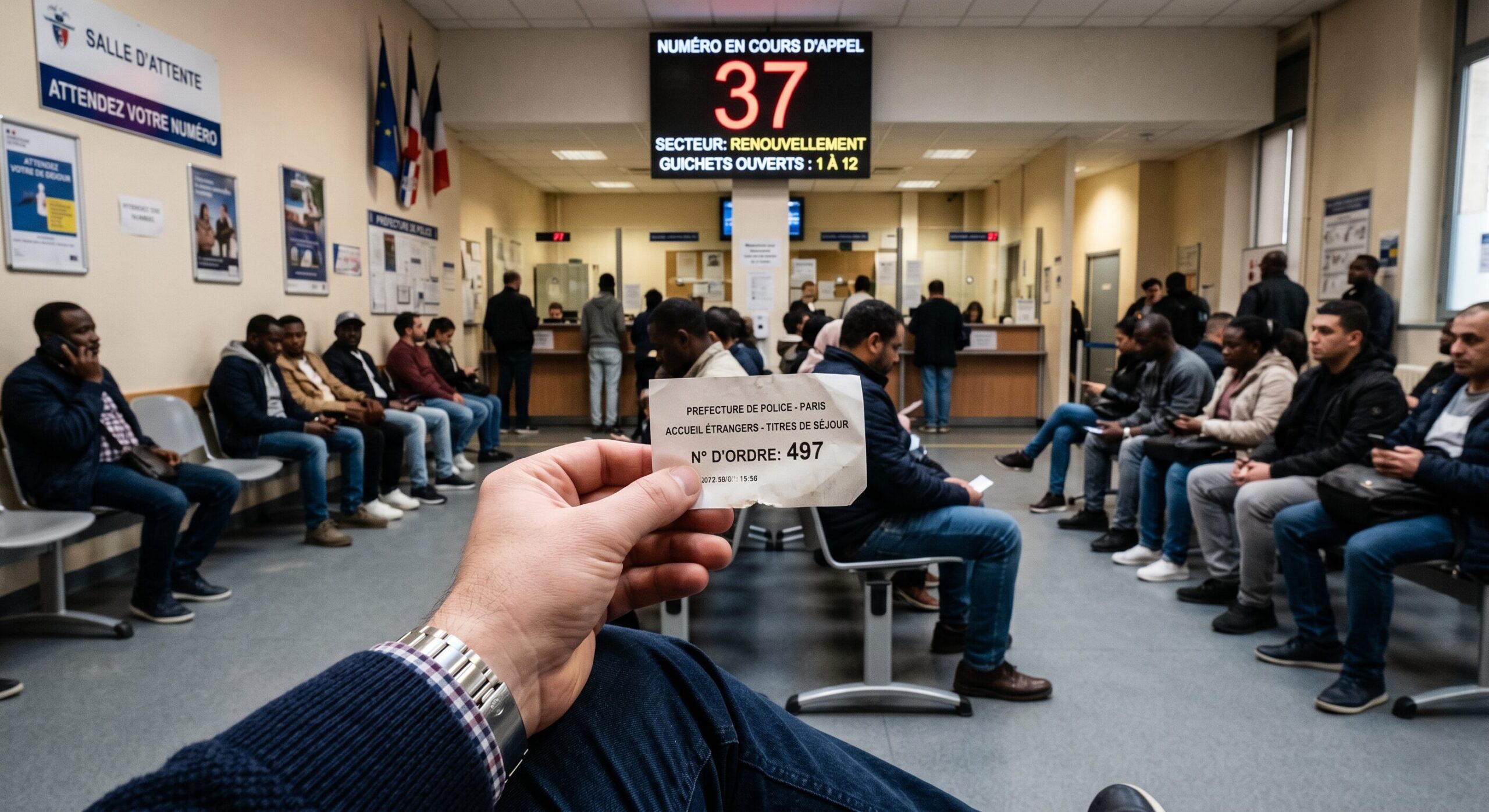

Towards a real improvement in processing delays?
“My employee can no longer work, their residence permit has expired… yet the application was submitted on time.”
This is a situation we now encounter on a daily basis at Oui Immigration.
The reason? Increasingly long processing times at French Prefectures. These delays are leading to gaps in legal status, as well as legal, financial, and operational risks for employers. In some areas, Prefectures are reporting delays of up to 11 months just to review a file.
In response to growing tensions (litigation, complaints, media pressure), the French Ministry of Interior issued the April 5, 2026 Circular, with two key objectives:
-
-
- Reduce residence permit processing times.
- Prevent gaps in legal status (particularly the right to work).
-
What is the French government offering?
- Reprioritization of applications Prefectures are instructed to:
-
-
- Prioritize urgent cases, especially renewals.
- Favor longer-term permits (multi-year and residence cards), even if not explicitly requested.
- Limit requests for documents not included in official checklists.
-
- Additional resources To support these measures, the government has announced:
-
-
- The creation of 500 additional positions.
- Increased internal training.
- €2 million allocated to overtime to reduce the current backlog.
-
- Operational changes Several technical developments complement these measures:
-
-
- Automation of “Attestations de prolongation d’instruction” (API) via ANEF, valid for up to 12 months (ensuring continuity of residence and work rights).
- Extension of biometric data validity to 10 years (previously 5 years).
- Removal of the obligation to declare a change of address for holders of 10-year residence cards.
-
What does this mean in practice for employers and international talent?
While these measures clearly go in the right direction, their impact will not be immediate. In practice, processing times will remain heavily dependent on the specific Prefecture, existing backlog levels, and internal organization.
Key takeaways In this context, several best practices remain essential:
-
-
- Anticipate residence permit applications and renewals as early as possible.
- Submit complete applications from the outset to avoid additional document requests.
- Anticipate requests for temporary extension certificates (API), which are not always issued automatically.
- Take into account the introduction of the civic test (since 2026), which is progressively becoming a requirement for certain long-term residence permits and naturalization.
- Be strategic when choosing the place of residence, as processing times vary significantly between Prefectures.
-
At Oui Immigration, we see it every day:
👉 A well-prepared application = weeks (or even months) saved.
👉 A poorly anticipated application = an employee blocked.
Do you manage international talents in France or globally?
Oui Immigration supports companies and individuals with all their immigration challenges.
Contact us: oui@oui-immigration.com